2003
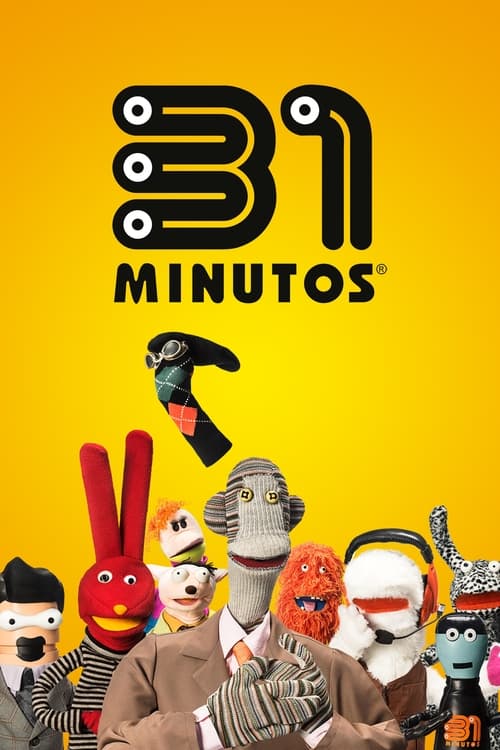
Chilean television show which takes the form of a mock news broadcast, and is fronted by puppets who present various items.
1969
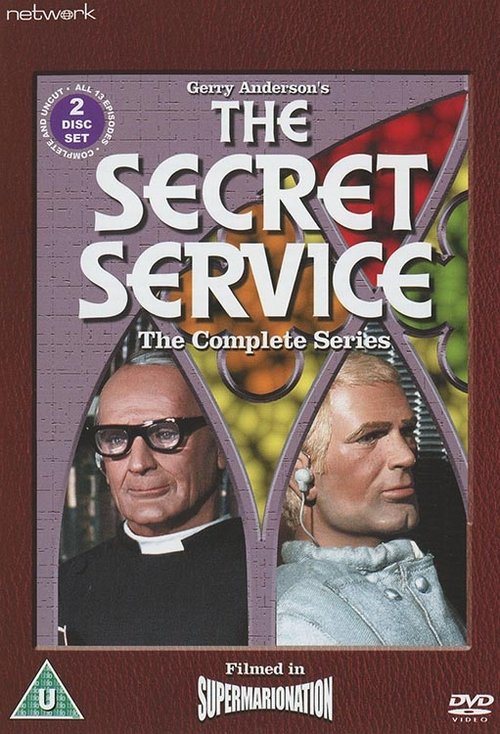
The Secret Service is a 1969 British children's espionage television series, produced by Century 21 / ITC Entertainment for Associated Television, Granada Television, and Southern Television. Created by Gerry and Sylvia Anderson, and produced by David Lane and Reg Hill, it was the eighth and final Century 21 production to feature Supermarionation. Under the direction of Gerry Anderson, who wanted to compensate for the inadequacies of Supermarionation and increase the realism of the format, The Secret Service incorporates footage of live actors for long-distance shots. Father Stanley Unwin, voiced by and resembling the real-life comedian of the same name, is the parish priest of a rural English village. But Unwin is in fact a secret agent for BISHOP, a covert British Intelligence branch that battles international criminal and terrorist threats. Aided by junior operative Matthew Harding, Unwin answers to his London-based superior 'The Bishop', as he would in his public profession.
1977
The story begins on a tiny island called Morrowland, which has just enough space for a small palace, a train station and rails all around the island, a grocery store, a small house, a king, two subjects, a locomotive named Emma, and a locomotive engineer by the name of Luke.
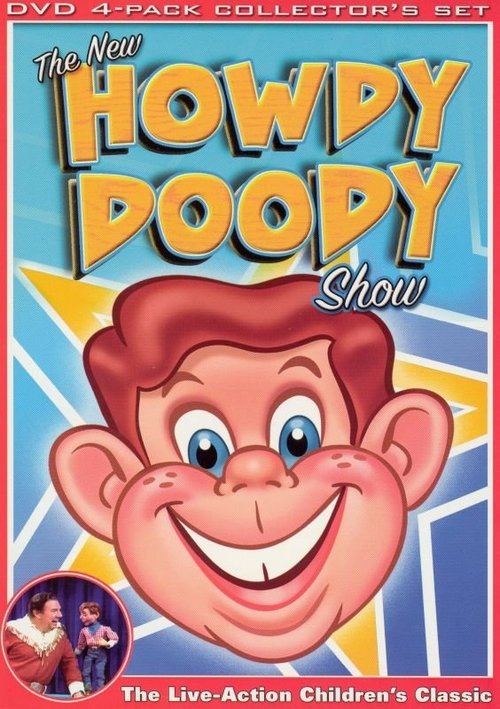
Say kids! What time is it? Well, in 1976 it was time for The New Howdy Doody Show! A new generation met Howdy and his friends that year, and now you can enjoy them again! Featuring songs, gags, and the peanut gallery, it's as good as you remember! This is a remake of the original Howdy Doody Show.In the 1970s, "Buffalo Bob" Smith revived the character he'd help create and turn into a true American icon during the 50s, the freckle-faced marionette known as Howdy Doody. Bill LeCornec (who played Chief Thunderbird and the voice of Dilly Dally on the original Puppet Playhouse) joins them as Nicholson Muir, with Marilyn Patch as Happy Harmony.
1974
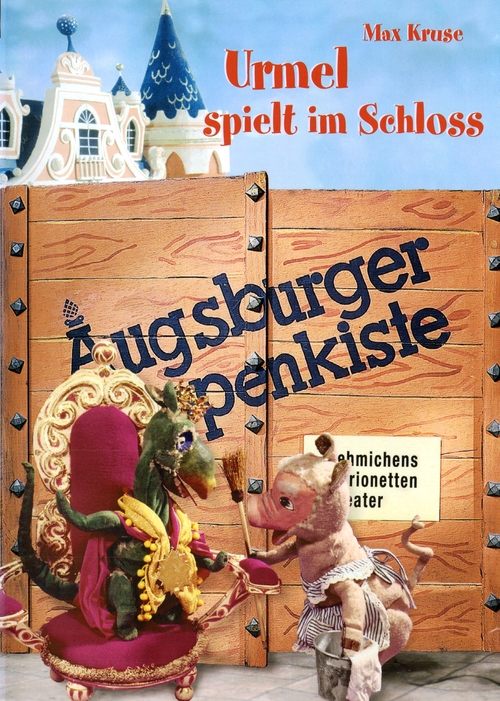
Urmel plays in the castle - There is still a rumor in King Pumponell's kingdom that talking animals and Urmel live on a lonely, remote island. Museum and zoo director Dr. Zwengelmann will not rest until he has seen with his own eyes what he considers to be pure "fantasy". His niece Naftaline, who is keen to write a big report for her newspaper, also wants to know more about this mysterious island, the talking pig Wutz and the sensational Urmel. But if people found out about the talking animals from the newspaper, the island would soon be visited by many curious people. This must be prevented. Meanwhile, Urmel and Wutz hide out in King Pumponell's castle.
2009
2016
In an Eastern-styled fantasy setting, a brother and sister team of sacred guardians is beset by the Xuan Gui Zong, minions of Miè Tian Hai, who seeks the Tian Xing Jiàn sword that they possess. Hai showing up himself leads to the defeat of the brother, but his sister, Dan Fei, jumps off a cliff to temporary safety. Later, a wandering swordsman comes across a ruined temple where a statue of Buddha is protected by an umbrella against the rain. When he takes the umbrella for himself, a man resting under a tree nearby informs him the he must be compassionate to the next traveler he meets as trade-off for taking the umbrella. But the next traveler is Dan Fei, who is still being pursued by the Xuan Gui Zong minions, and between that and the sorcery of the other man he finds himself unable to avoid getting involved.
1984
Ōkiku naru Ko (大きくなる子 Children growing up) was an educational Japanese show, produced by Studio Nova, that aired on NHK through April 7th, 1959, to March 18th, 1988. It was created for 1st and 2nd-year primary school students in Japan, teaching them lessons like morals and how to act at school. The show is more notable for the Monkey Puppet meme portrayed by the main protagonist Pedro.[1] In the 1980s and 1990s, the series was also aired in Latin America under the name "Niños en crecimiento". This was the penultimate season of the show, airing from April 13th, 1984, to April 4th, 1986, in Japan.[2]