2020
Solving for Z explores IFMGA guide and father Zahan Billimoria’s relationship to the intoxicating highs and crushing blows of a life in the high-consequence environment of big mountain skiing.
Deceased but not forgotten. In 2017, Switzerland's most famous mountaineer, "Swiss Machine" Ueli Steck, fell to his death in the Himalayas when he was just 40 years old. Three close friends travel again to the Everest region where he died. His family in Emmental has to deal with premature death.
1983
A team of 12 men, 5 sailors, a doctor, a writer, a film crew, and 3 mountaineers, Jean-Marc Boivin, Thierry Leroy, and Dominique Marchal, set off by sailboat from Mar del Plata in Argentina to reach Riso Patron in Chile, via the Strait of Magellan, the Patagonian Channels, and Falcon Fjord. Their goal is to climb Riso Patron and then make the first crossing of the Campo de Hielo Sur glacier, or Hielo Continental Patagónico, to meet up with the sailors in Puerto Williams on Navarino Island in Chile, a village at the end of the world. After three attempts and an accident for Leroy, who was repatriated, they gave up, crossed the glacier and rejoined the boat, to set off for Cape Horn to climb the South face, knowing that the weather was good one day a month... On January 20, 1983, Jean-Marc Boivin and Dominique Marchal succeeded in making the first ascent of the South face of Cape Horn.
2003
May 25, 1996 - Bruce Herrod, a South African mountaineer reached the summit of Everest at 5 p.m. On the radio, we urge him to come down as soon as possible because the descent is dangerous in the middle of the night. A few hours later, no news from him. From this South African expedition which turned into a fiasco and another expedition carried out in parallel, the testimonies of the members of these expeditions show to what extent the thirst for climbing to the top of certain mountaineers, combined with the lack of oxygen , can alter the lucidity of climbers to the point of changing their relationship to death and thus lead them to neglect other expedition members in order to ensure their victory or save their own life.
1978
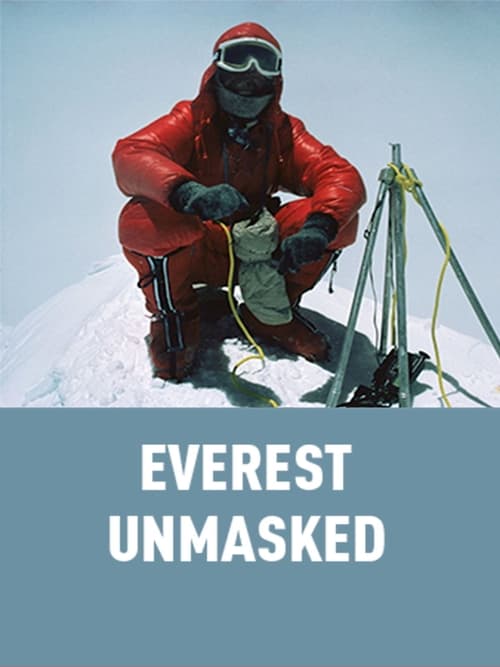
Record of the first ascent of Everest made without the use of oxygen equipment, made in May 1978 by Reinhold Messner and Peter Habeler. Could it be done? Would their blood vessels burst? Would they suffer brain damage leading to madness? Nobody was sure. Messner: 'I would never come here for trying Everest with oxygen. That is not a challenge for me.' A fascinating piece of history, well filmed by Leo Dickinson and Eric Jones (above the South Col Messner used a cine camera to continue the filming), featuring Messner and Habeler's thoughts. The film follows the usual sequence from Namche to Base Camp, through the Icefall, to Camps I, II and III. It also shows historical footage of the pioneering Mallory and Shipton expeditions.
2014
BRAVE NEW WILD is an offbeat chronicle of America’s Golden Age of rock climbing before and after the controversial ascent of the Dawn Wall in 1970. Some forty years later, Oakley Anderson-Moore, the daughter of a pioneering climber, stumbles upon her father's old hi8 tapes, and sets out to answer the question: why climb when there's nothing to gain -- and everything to lose? Wry humor and an eclectic original soundtrack punctuate the delinquent antics of the Vulgarians in the ‘Gunks, the larger-than-life rivalry of Yosemite’s rock gods, and the fruit tramping, freight train hopping hobodom of her dad’s climbing life. This film is quintessential viewing for those who long for adventure.
1986
Mont Blanc, the highest peak in the Alps, rises to 4,810 m and was first climbed on August 8, 1786. Chamonix natives Jacques Balmat and Michel Paccard set out on the afternoon of August 7 and returned victorious on the morning of the 9th, after two nights spent outdoors. This film is a staging that reconstructs this great event with all the problems it created and resolved, thus contributing to the emergence of the modern concept of mountaineering. Denis Ducroz, guide and filmmaker, immerses us in the minds and times of these two men, 224 years later.
2002
This documentary is a reconstruction, based on archive footage, testimonies, and filmed reconstructions, of the Vincendon / Henry tragedy. December 1956: Jean Vincendon and François Henry, two young mountaineers, aspire to join the High Mountain Group. Lacking experience, they set out to climb Mont Blanc via the Brenva spur in the middle of winter. The weather conditions deteriorated, and they decided to give up before meeting Walter Bonatti and Sylvano Gheser. They then decided to continue the climb and set off in two different roped parties. Bonatti decided to take refuge at the Vallot refuge higher up, rather than descend. The two young mountaineers, overcome by the poor weather conditions and fatigue, remained stuck for several days at 4,000 meters. What followed was a completely disorganized rescue operation that became, for more than ten days, a spectacle for all of France and a national tragedy.