2023
A captivating story that takes you inside the heart of the Argentina national team camp of "La Albiceleste". Witness the incredible moments since they added a third star to their iconic jersey. Listen to their unique perspectives as they reflect on an unforgettable tournament, sharing the deep sense of connection that winning has forged between them and a nation behind them. A story about passion, dedication, and unity that make Argentina's victory truly memorable.
2011
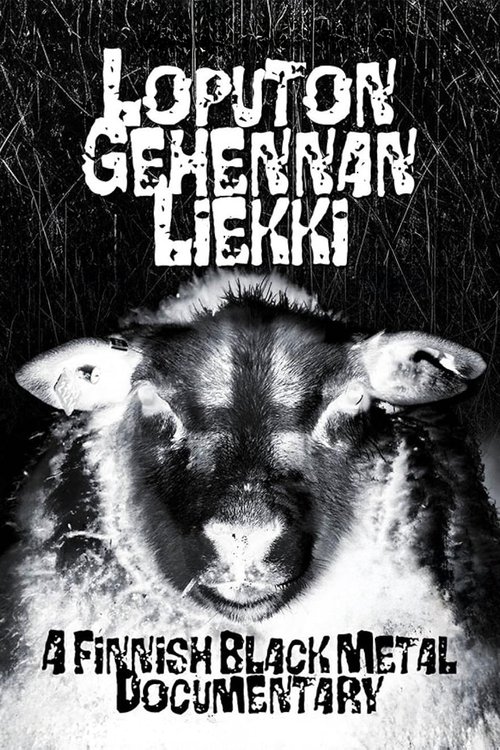
Finnish black metal is known for its extreme views and merciless no-compromise approach. As a music genre, black metal often has a strong ideological aspect. Satanic values, glorification of evil and unsolidarity, as well as pure hatred towards Christian and multicultural society, are more than just childish rebellion for the people involved. Eternal Flame of Gehenna examines the phenomena through interviewing the key figures of the moment. It gives a face to a subculture seen as a threat to common safety by Finnish Security Intelligence. In this movie, one will find out about the thoughts of a grave violator, grave robber, and hear what they feel when an old wooden church is burning down. Eternal Flame of Gehenna is also a view on the history and the current state of Finnish black metal, featuring bands like Azaghal, Azazel, Barathrum, Beherit, Enochian Crescent, Goatmoon, Horna, Satanic Warmaster etc.
2024
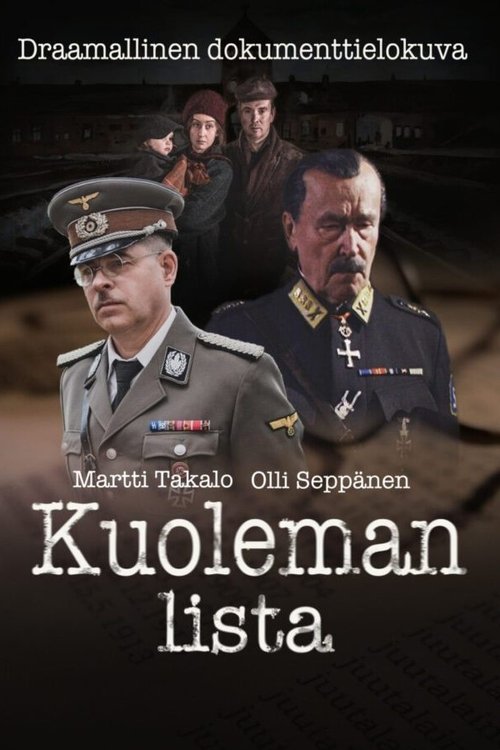
A dramatic documentary film that deals with the Nazi rise to power in Germany in the 1930s and the development of the persecution of Jews up to the Holocaust. The film tells about the attitude of the Finnish government to the request for the handover of the Finnish Jews presented by Heinrich Himmler in the summer of 1942. The main focus of the film is the life of Jewish refugees in Finland in the years 1938-1942 and the attitude of the Finnish government to their handover in the fall of 1942.
1938
A documentary short on logging during winter season.
2018
In this documentary film a team of researchers examine the social contexts that influenced the emergence and permanence of heavy metal music in Chile, Argentina, Mexico and Peru. Colonialism, dictatorships, terrorism and neoliberal exploitation serve as points of reference for how heavy metal in the region has been directly linked to each country's social and political context.
2006
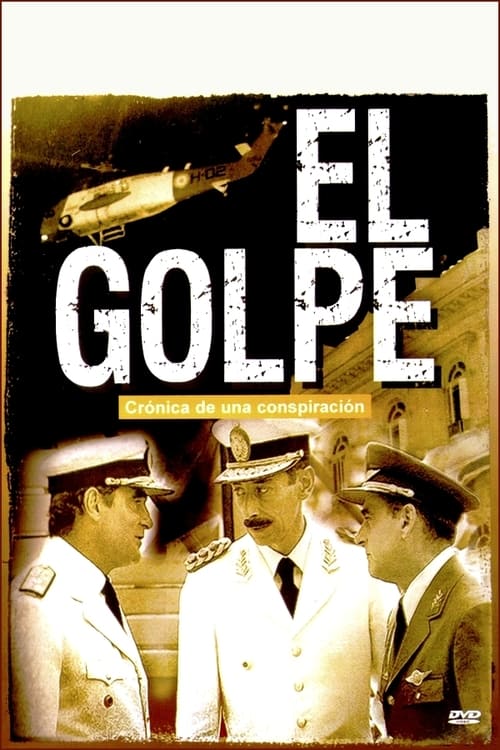
Argentina, 1973. The return of democracy marks the beginning of a new countdown to the next coup d'état: on March 24, 1976, the worst dictatorship in Argentine history is installed, the bitter fruit of a plot carefully hatched for months.
2017
A young man decides to join the army. He becomes the drummer in the military band, and his everyday life is now a combination of military training and music. What does the Argentine Army do these days, more than thirty years after the dictatorship? What does it mean to be a soldier in a country without wars?
Chileans are asked about their definition of the word (and the concept of) "power", as they answer images flash on the screen of powerful and powerless figures in Chilean history.
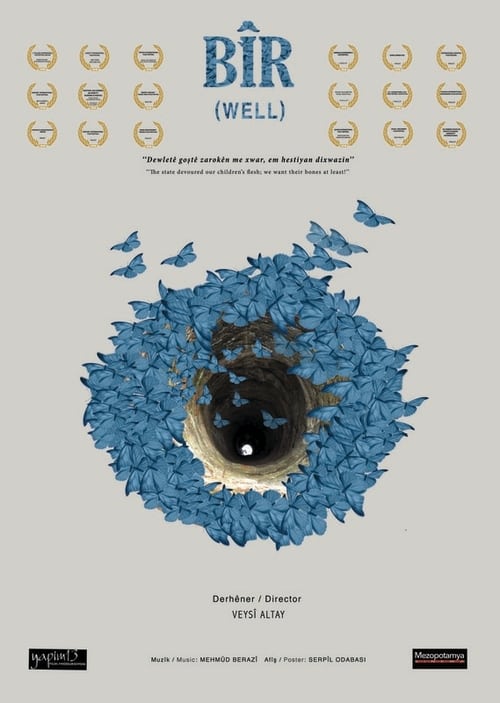
In the 1990s many people in Kurdistan were taken into custody and interrogated under torture; their killers disposed of the bodies by throwing them out of helicopters, or burying them in acid-filled wells. Thousands were murdered/disappeared by paramilitary forces—such as Jitem and Hizbul-Kontra—that were financed and supported by the state, though they have always stuck to the line: “We didn’t do it.” The documentary looks at the case of seven people, including four children, who were disappeared from the town of Kerboran [Dargeçit] in 1995, and tells the story of their families’ tireless search for their bones
2001
This is the story of Pablo, a young uruguayan exiled in México, whose father was disappeared during the military dictatorship.
During the Pinochet dictatorship, Jorge Lübbert became an instrument for the Chilean secret services, who forced him to work for them in an extremely violent way. He was able to escape from Chile and became a war photographer based in Belgium. Today, his son Andrés takes him back to the places of his unfinished past.
1973
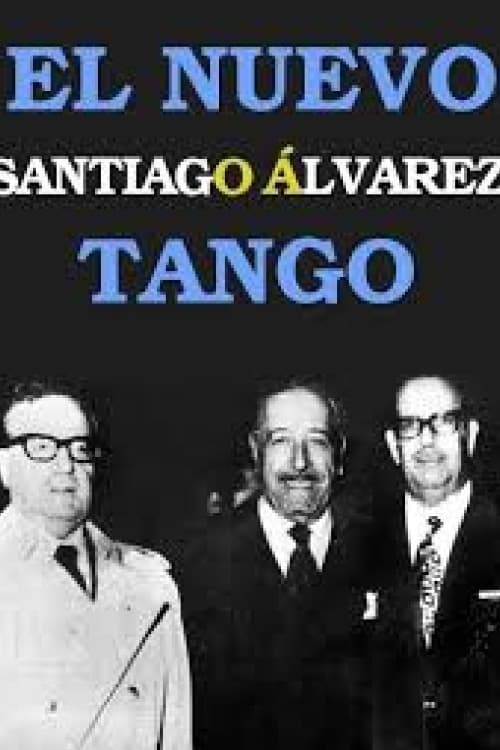
The New Tango (El Nuevo Tango) was not shown in Argentina for a long time as it deals with the ascent of Argentinean president Hector Campora in May 1973, and features Cuban and Chilean presidents, Osvaldo Dorticos and Salvador Allende. A million people gathered on the Plaza de Mayo to acclaim the new President. One of Cámpora's first presidential actions was a granting of amnesty to political prisoners who where jailed during the dictatorship. On 28 May Argentina restored diplomatic relations with Cuba, which then received Argentine aid - such as food and industrial products - to break the United States embargo against Cuba.