1895
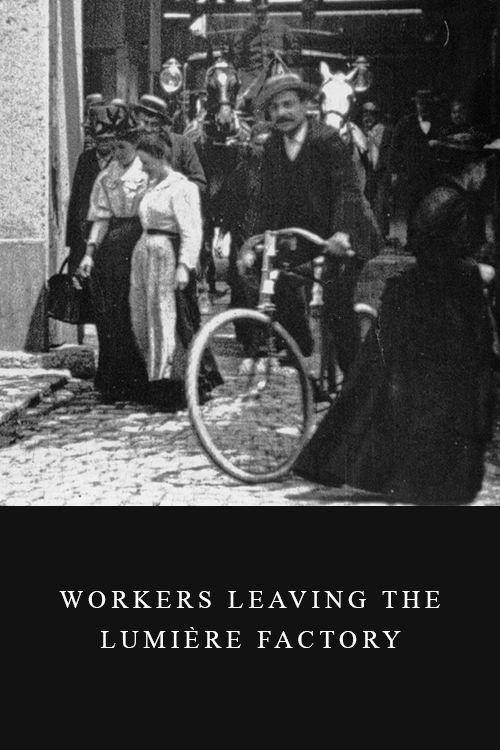
Working men and women leave through the main gate of the Lumière factory in Lyon, France. Filmed on 22 March 1895, it is often referred to as the first real motion picture ever made, although Louis Le Prince's 1888 Roundhay Garden Scene pre-dated it by seven years. Three separate versions of this film exist, which differ from one another in numerous ways. The first version features a carriage drawn by one horse, while in the second version the carriage is drawn by two horses, and there is no carriage at all in the third version. The clothing style is also different between the three versions, demonstrating the different seasons in which each was filmed. This film was made in the 35 mm format with an aspect ratio of 1.33:1, and at a speed of 16 frames per second. At that rate, the 17 meters of film length provided a duration of 46 seconds, holding a total of 800 frames.
2002
In her recent films, Geiser has been exploring the possibilities found in merging video texture with film, creating a kind of deep, ambiguous space, a suggestion of “the floating world”. In ULTIMA THULE, gravity fails, land and sky lose their historical meaning. A small silver plane navigates an ultramarine storm, flying over barely-glimpsed hills, an unlikely ferry to ”Ultima Thule”: the farthest point north, the limit of any journey. The seduction of immersion in blue is too strong to avoid, the land fills with water, and time loses its line.
2006
Death as a global service provider? Unthinkable! So far Death has thought that too. But then his nephew Cedric had the crazy idea of founding the company AFTER LIFE while his uncle was away. This company takes over the craft of death with the latest technology and markets it worldwide.
2022
JB Smoove and Martin Starr host a celebration of 20 years of "Spider-Man" movies, from the Sam Raimi trilogy to Marc Webb's movies and the trio from Jon Watts.
1945
This one features Jasper talking to the Talking Scarecrow. The Scarecrow then tells Jasper in flashback about his show business days. You see many scenes of dancing watermelon men and other minstrel caricatures.
1964
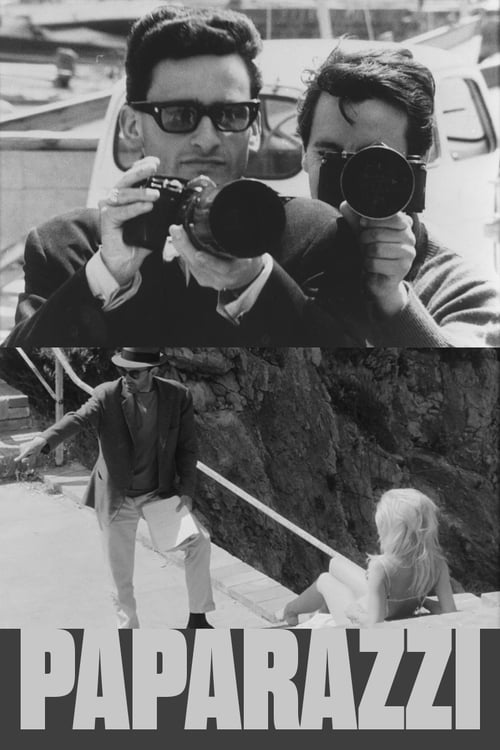
Paparazzi explores the relationship between Brigitte Bardot and groups of invasive photographers attempting to photograph her while she works on the set of Jean-Luc Godard's film Le Mépris (Contempt). Through video footage of Bardot, interviews with the paparazzi, and still photos of Bardot from magazine covers and elsewhere, director Rozier investigates some of the ramifications of international movie stardom, specifically the loss of privacy to the paparazzi. The film explains the shooting of the film on the island of Capri, and the photographers' valiant, even foolishly dangerous, attempts to get a photograph of Bardot.
1994
In a world where admiration and status are given to whomever can carry the heaviest books on their head, a man hopes his son will achieve what he himself couldn't.
2013
Their last dinner before he leaves to join the Army. The reality of the situation begins to break in through the four surrounding walls.
1938
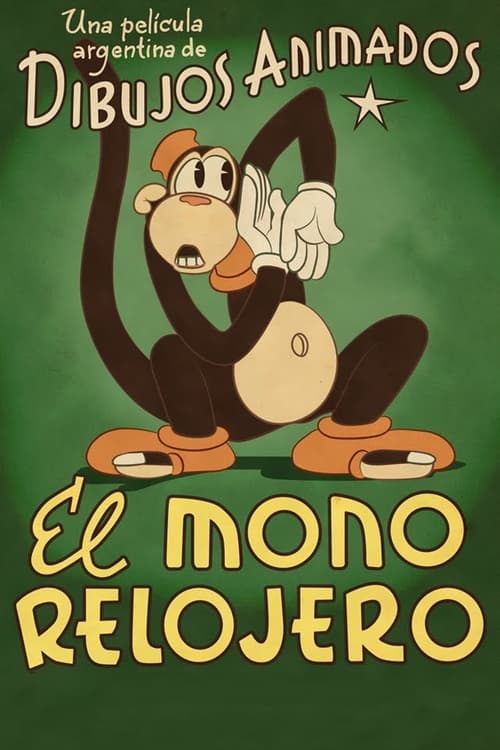
El Mono relojero is a 1938 Argentine animated short film directed by Quirino Cristiani. It is the only film from this director that exists up to this day, since all his other productions (including the first two animated feature films, El Apóstol (1917) and Sin dejar rastros (1918), as well as the first animated film with sound, Peludópolis (1931)) were lost in a series of fires at the facilities where the negatives and copies were stored.
This is a story about the origin of hostility between a cat and a dog. Based on the ballad of Hovhannes Tumanyan.
Koro wants to get to the other side of the road.