1938
Nazi Third Reich propaganda film that used architecture as a statement about "racial accomplishment," and so called "racial superiority." Hitler claimed that between 1934 and 1940, the Nazi rule of Germany had produced architectural uniqueness, and this film was produced to shown to attempt to validate that. The opening montage gives a survey of earlier Gothic and Baroque structures in the country as an example of "architectural superiority" that the German race was said to be the sole inventor of; then moves on to deride the recent construction of the Bauhaus school (with a racially motivated score of Jazz music) and an example of German "architectural decay." Then proceeds to show off buildings constructed by the Nazi and an architectural revival, to "last 1000 years," Film also spends a great of time dwelling on massive and "busy" monuments that had been erected all over the county.
2002
1989
In the same vein as Meri's other documentations, this one takes advantage of the glasnost policy to discuss the social and ecologic impact of the Russian oil industry on the natives and the lands they inhabit.
1979
This is the story of John Andrews, world-famous Australian architect. In the mid-1960s, when only 29, Andrews was commissioned to design Scarborough College at Toronto University. One of the world’s first ‘megastructures’, it was an important experiment in urban and educational planning. Andrews also designed the Canadian National Tower in Toronto, which was the tallest freestanding structure in the world at the time it was built.
2007
A documentary on the late American entertainer Dean Reed, who became a huge star in East Germany after settling there in 1973.
2017
2024
The documentary explores the legacy of Star Trek: Voyager (1995).
2023
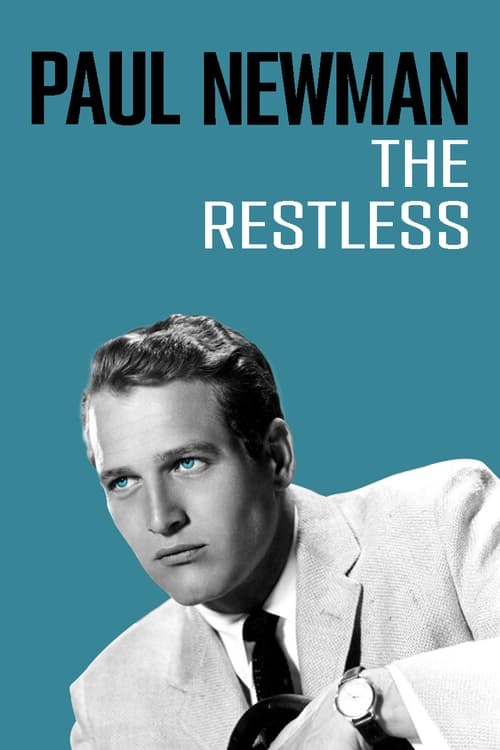
Multi-talented, Paul Newman is one of the greatest American actors of all time. With his silhouette of a Greek statue and his unreal blue eyes, he embodied the quintessential Hollywood star. But he never seemed satisfied. The son of a Jewish sporting goods retailer who despises him and a Catholic mother who adores him, driven by self-doubt and an inherited need for approval from his childhood, he has worked throughout his fifty-year career to break the image of the pretty boy. He made his first experiences in the famous Actors Studio. The breakthrough as a screen star came in 1958 with "Cat on a Hot Tin Roof". From then on he preferred characters on the edge of the American dream. With archive images and film excerpts, the documentary paints a portrait of a socio-politically committed man with many facets and also pays tribute to the role of his wife Joanne Woodward.
2020
Watch these important conversations by transgender, GNC, and queer masculine-of-center folx and join us in creating a new definition of masculinity.
2014
Retrospective featurette included with the 2014 Blu-ray by Arrow Video.
Retrospective interview with Joe Pantoliano included with the 2014 Blu-ray by Arrow Video.
2010
In the summer of 1989 tens of thousands of tourists from communist East Germany came to Hungary. They were deeply disillusioned because they felt they had no future in East Germany. There was no freedom, no choice in the shops, salaries were low and they could not travel except to Eastern Europe. They wanted to go to a prosperous and free West Germany but they could not get passports, so they hoped that by travelling through Hungary, the least suppressed country of the Soviet Block, they could cross the Iron Curtain into Austria and then travel on into West Germany. For them the Hungary of twenty years ago was the new east-west passage. Written by Czes