1994
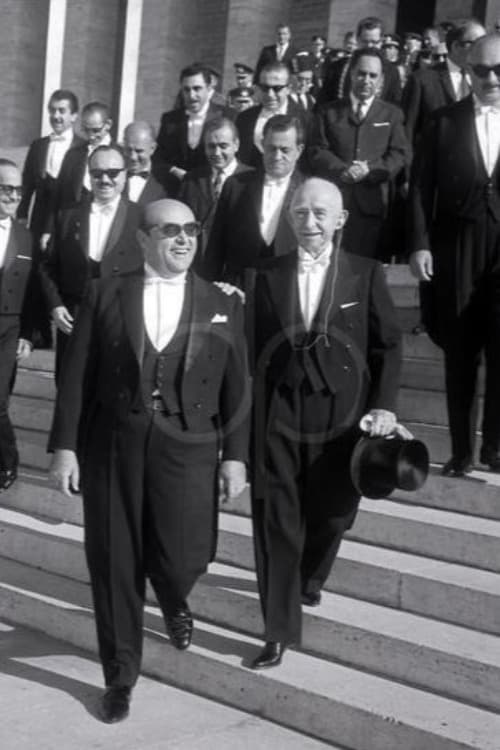
By the end of 1963, the word coup was no longer spoken in Turkey. Talat Aydemir is history, the last tremors of the May 27 earthquake have passed and the sliding faults of the regime have begun to settle into place. In this transition period, which lasted more than four years, the person who managed to get the ship to the port without running aground was İsmet İnönü. He ruled for four troubled years in a country torn between armed uprisings, Cyprus crises, coalition governments and regime debates. But meanwhile, he was also worn out. In the local elections held at the end of 1963, while the CHP's votes remained at 37 percent, the AP found 45 percent. But on the very day of the final election results, a few gunshots heard from across the Atlantic turned everything upside down...
Revolutionaries passed before the streets of the 1960s on the road to democracy. Then the use of victory songs and rebellion flags, right-wingers, leftists and putschists again. The February 22nd Operation could not revolutionize, but it succeeded in overthrowing its government. Unexpectedly, because of an amnesty... İnönü kept Talat Aydemir's forgiveness by making a promise to him when he received him and drafting a law. But when this structure came to the Parliament, the AP members revolted. They also asked for the ex-Democrats to be pardoned. They said "all or nothing". It's a mess. When the AP insisted, İnönü resigned. Thus, without doing much work, Turkey's first settlement was dissolved in six months. İnönü was brought to the head of the new crime again. However, this time, EP was excluded and a second provision government was formed with CHP, YTP and CKMP. And the winds blowing from Kayseri would continue to sweep Ankara more...
1970
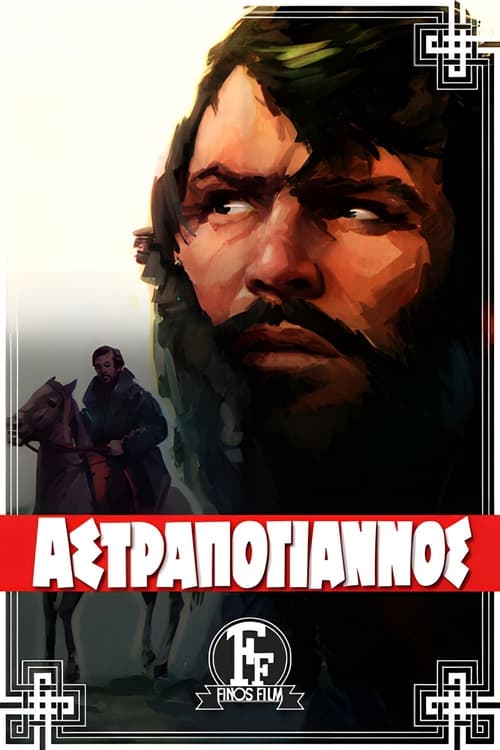
The battle-scarred hero of the Greek Revolution, Giannos "Astrapogiannos", returns home after the end of the blood-soaked War of Independence, only to find himself in a new conflict, as he locks horns with a ruthless local Kodjabashis.
1991
Looking back at the turmoil of the 1950s today, it's hard not to be sad. Even though one knows the end of the story, he is always waiting for something to happen to prevent this bitter ending. He wants the mistakes made to be noticed, a common point to be agreed and the accident that says I am coming to be prevented. But in vain... After the accident today, all we can do is look at the causes of the accident and learn from it... Beginning from the mid-1950s, the democracy, which was knitted stitch by knot before, began to unravel again, stitch by stitch. A tense, harsh, vicious period has opened in the political arena... It seemed impossible to see the future and take precautions in that dusty smoke...
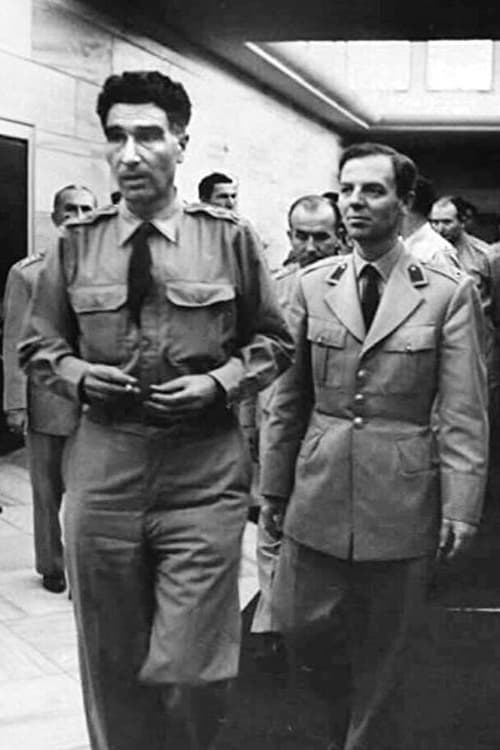
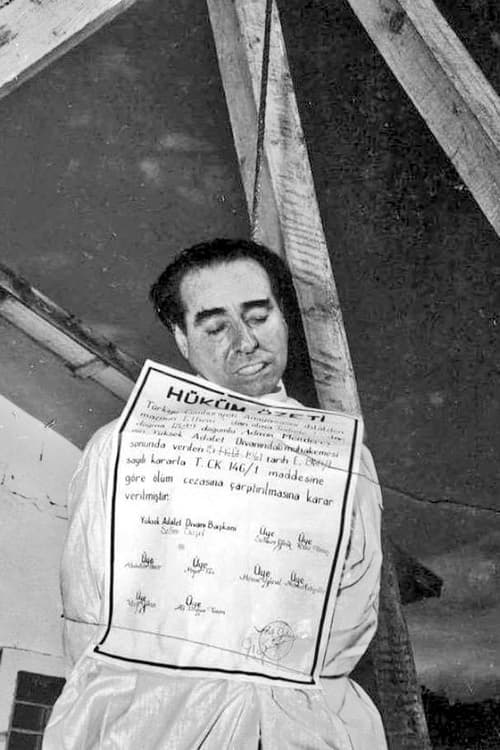
While the government was in a deep sleep, the brain staff of the revolution was completing its final preparations at the Military Academy, there were only a few hours left for the revolution that had been prepared for six years. Despite six years of preparation, there was actually no serious plan at hand. An unplanned, unscheduled full night raid was to be organized. The management level of the army was pro-government. Therefore, it was impossible for the intervention to take place within the chain of command. This was to be a grassroots military operation. The army of the operation consisted of young cadets. Except for the Harbiye, there was no force at hand. It was even possible for units such as the Guards Regiment and the Central Command to resist. That's how the day of May 27 began with the unknown and risks. Major General Cemal Madanoğlu, the commander of the Revolution Headquarters, would have the last word...
It is a famous saying: "One can come to power with a bayonet, but not sit on it." The organization, which carried out 27 May, came to power with a bayonet. Moreover, these young officers seized power that night by breaking the traditional chain of command. In the morning, a 10-year DP period was over, the support of the public was gained at first hand, and a brand new phase was reached. Now, the days that would mark the future of Turkey were beginning. Now, as those days put it, the "second republic period" was beginning.
We came to the end of the road. We told you the story of the establishment of a democracy throughout 9 episodes... We witnessed the collapse of a one-party regime. We witnessed the disappearance of the national chiefdom. Together we experienced the holding of the first free general elections and the raising of democracy in pain. And finally, we told you about the birth, rise and fall of a new power. Where we ended up was a military intervention. Whatever the reasons, the storm of revolution had blown once. Now the task of the officers who seized power on the morning of May 27 was to contain that storm. But it didn't. After a while, the storm started to drag the revolutionaries in front of it. The historical scenario was repeated. The Revolution ate some of their children. The revolution was now speaking its own language...
2014
Evaporating Borders is a poetically photographed and rendered film on tolerance and search for identity. Told through 5 vignettes portraying the lives of migrants on the island of Cyprus, it passionately weaves themes of displacement and belonging.
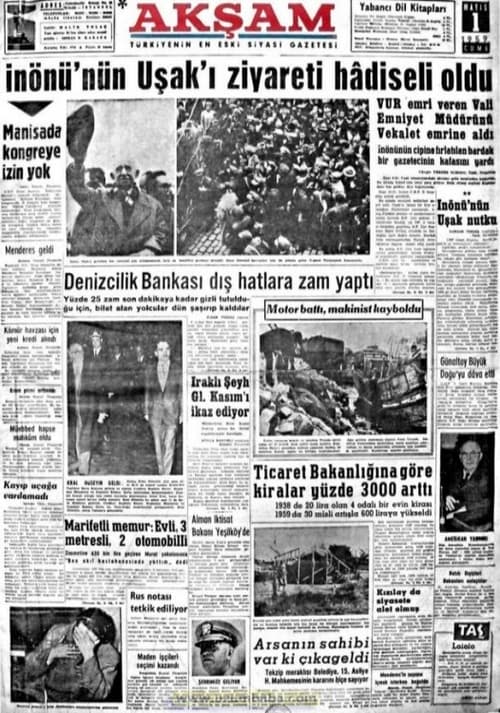
In the past, when spring came, there was a spring atmosphere in politics. But the spring of 1959 brought the CHP's spring offensive on the contrary. Seeing that the opportunity for a dialogue was completely lost after Menderes' plane crash, İsmet Pasha put on his boots in April and took his 46 deputies with him to the expedition. The chosen route was the route of the Great Offensive in the War of Independence. Uşak, where İnönü took the Greek Commander-in-Chief Trikupis prisoner, was the first stop...
2011
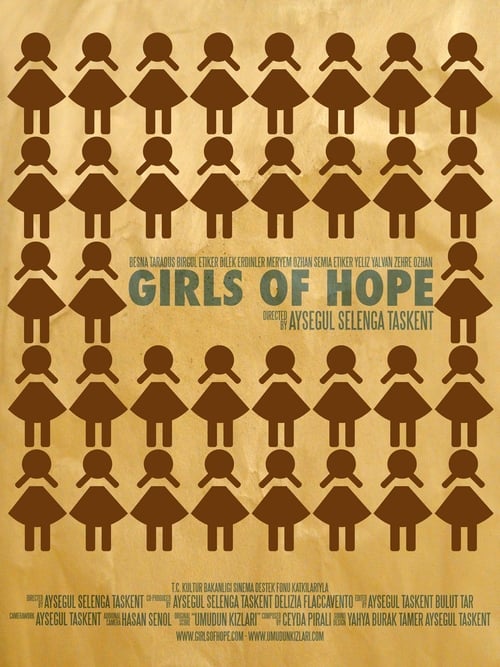
In Turkey far too many women are still unable to read and write, and all they see in their life span is being forced into early marriage and relegation to the home, where they look after extended families and more children than they can feed. The girls are portrayed in their homes, together with the strongest supporters of their emancipation through education: their mothers. Girls of Hope portrays five girls who struggle for their education and, despite all the difficulties, try to hold on to their hope for a better future.
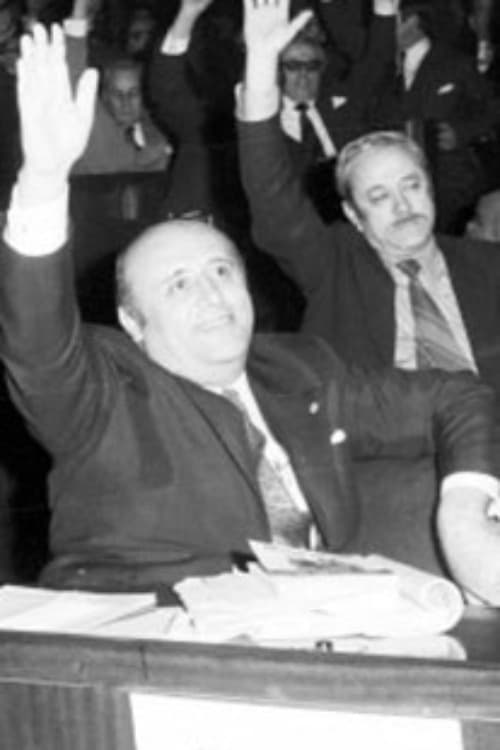
Demirkırat stumbled on March 12, 1971. Actually, you know, they shoot limping horses. But this time it didn't. Turkish democracy continued to run despite its wounds. Because March 12 was not a "seizure" but a "warning". The generals were saying, "If what we want is not done, we will seize it." The country was entering a new era under this Sword of Damocles. A president who was helpless in the face of events, a prime minister who had to leave his seat, a newly fallen parliament, four generals neither inside nor outside the power... Now, a solution would be tried to be found out of this complex equation. But how and with whom? No one knew the answer to these questions in Turkey on the morning of March 13.
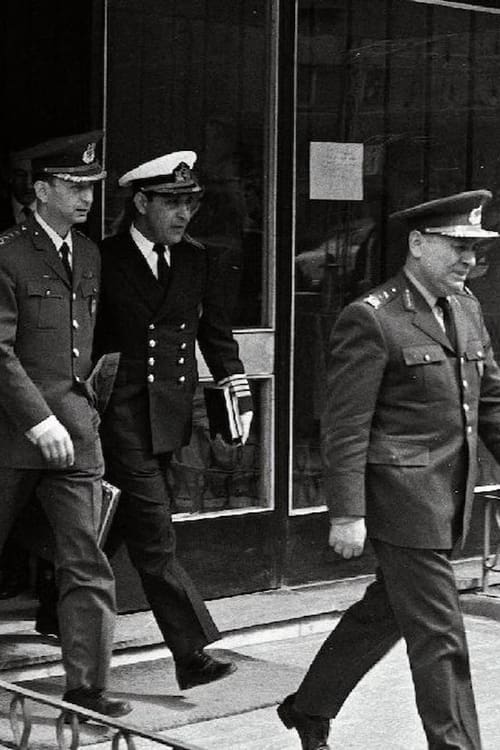
When March of 1971 knocked on the door, a military intervention was imminent in the country. Bombs were exploding in a strange way from right to left, and the urban guerrilla was resorting to unconventional acts such as bank robbery and kidnapping. The generals had decided to put a stop to this trend. Dynamite was placed under Prime Minister Demirel. The question now was who would ignite the fuse of the dynamite. President Sunay was waiting to watch the approaching explosion silently from Çankaya. Tuğmaç, Chief of General Staff, tried to delay the explosion as much as possible, preferring Demirel to self-destruct. The two generals were watching each other to see who would ignite the fuse first. These two generals were Faruk Gürler and Muhsin Batur. The fire was in their hands. They were going to detonate the dynamite...